
Atlas Group Consortium (AGC)
Projects Management & Infrastructure
Infrastructure • Execution • Operational Delivery
AGC Overview
The Atlas Group Consortium (AGC) represents the infrastructure and execution-oriented coordination environment within the Phoenix–Velixon Ecosystem.
The consortium was established to support operational implementation, infrastructure-related collaboration, engineering coordination, logistics integration, and projects management activities across multiple sectors and regional markets.
AGC emerged through years of participation in operationally demanding environments where successful execution depended not only on planning capability, but also on coordination discipline, implementation structure, technical alignment, and field-level adaptability.
Its structure became increasingly organized through the expansion of Phoenix Projects Management LTD (PPM), which helped create a more defined framework for infrastructure-oriented collaboration and implementation-focused operational coordination.
Today, AGC functions as a specialized consortium platform focused on:
- Projects management,
- Infrastructure coordination,
- Engineering support,
- Operational implementation,
- Logistics integration,
- And execution-oriented commercial environments.
The consortium was designed to support both standalone operational initiatives and larger multi-party environments requiring structured implementation capability across different sectors and jurisdictions.
Strategic Role Within the Ecosystem
Within the broader Phoenix–Velixon Ecosystem architecture, AGC serves as the ecosystem’s execution and implementation-oriented coordination environment.
Its role includes:
- Supporting infrastructure-focused collaboration,
- Facilitating operational delivery,
- Aligning implementation-capable participants,
- And coordinating execution-oriented project environments.
AGC plays an important role in transforming strategic planning into operational reality.
Many ecosystem initiatives ultimately require:
- Technical coordination,
- Infrastructure support,
- Logistics management,
- Operational supervision,
- Engineering alignment,
- And structured implementation environments.
The consortium was developed to provide a flexible execution framework capable of supporting these operational requirements while preserving the independent participation structure of contributing environments.
Unlike governance-oriented or market-development platforms, AGC operates much closer to:
- Implementation,
- Delivery,
- Operational management,
- And execution coordination.
This gives the consortium a highly practical operational identity within the broader ecosystem architecture.
Find out more details below
Core Focus Areas
AGC focuses on areas connected to:
- Infrastructure development,
- Projects management,
- Operational execution,
- Engineering coordination,
- Logistics support,
- Implementation planning,
- And field-oriented operational environments.
Its operational structure supports activities such as:
- Project coordination,
- Implementation oversight,
- Contractor collaboration,
- Logistics integration,
- Infrastructure support,
- Operational management,
- And execution-focused commercial participation.
The consortium also supports broader ecosystem initiatives requiring:
- Scalable implementation environments,
- Multi-party coordination,
- Technical collaboration,
And operational adaptability across complex projects.
Infrastructure & Operational Coordination
One of the defining characteristics of AGC is its emphasis on execution capability.
The consortium was not developed around conceptual planning alone.
Its structure was shaped by participation in operational environments where:
- Timelines,
- Implementation quality,
- Logistics coordination,
- Technical alignment,
- And operational continuity
Directly influenced project outcomes.
This created a consortium environment focused on practical execution rather than purely administrative coordination.
The participating environments connected to AGC contribute operational experience across:
- Infrastructure,
- Logistics,
- Engineering,
- Construction support,
- Projects management,
- And implementation-oriented commercial activities.
This operational grounding remains one of the consortium’s most important structural characteristics.
Strategic Coordination
The Atlas Group Consortium is strategically coordinated by:
- Abdulla Miqdadi
- Mohannad Zaza
- Ghaith Tarawneh
This coordination structure combines:
- Ecosystem development experience,
- Operational management capability,
- Infrastructure-sector coordination,
- Engineering and construction alignment,
- And implementation-oriented commercial engagement.
The consortium reflects a practical coordination model built around operational execution, technical collaboration, and scalable project participation across multiple sectors and regional environments.
Participating Founder-Aligned Environments
Founder-aligned participating environments connected to AGC include:
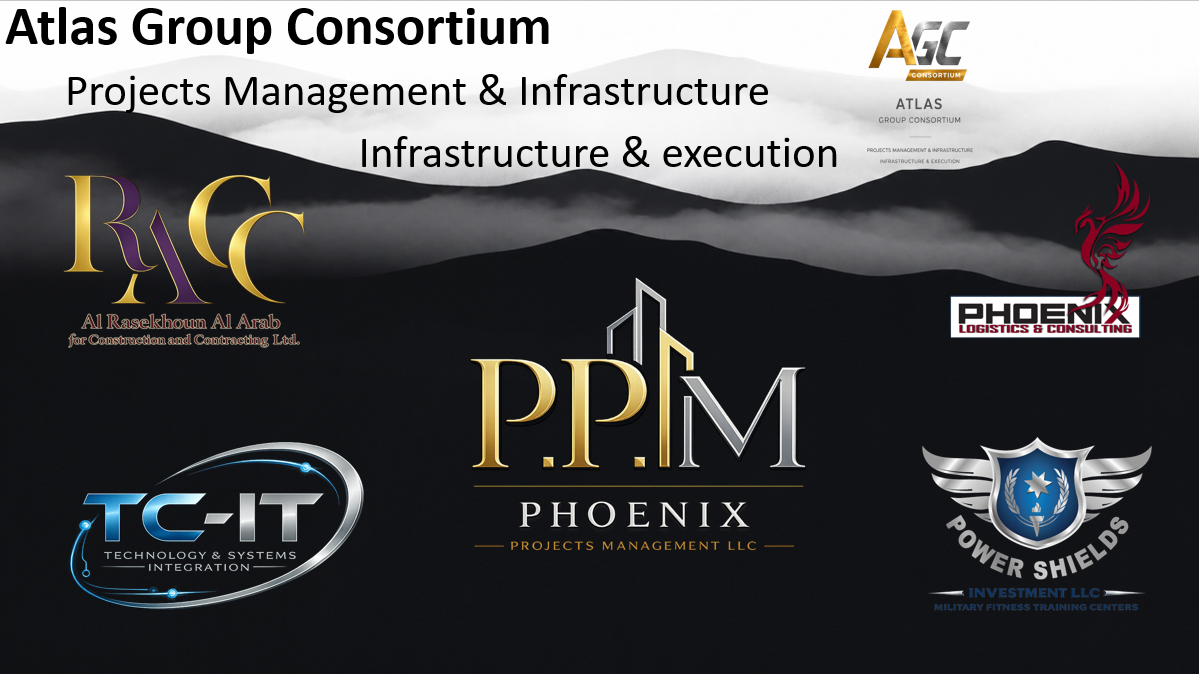
- Phoenix Logistics Services & Management Consulting LTD
- PowerShields Investment LTD
- Phoenix Projects Management LTD (PPM)
These participating environments contribute operational capabilities connected to:
- Implementation coordination,
- Infrastructure support,
- Logistics integration,
- Strategic project environments,
- Operational planning,
- And execution-oriented management.
Their participation forms part of the consortium’s broader implementation and infrastructure-focused operational framework.
Infrastructure & Implementation Participants
Additional aligned participating environments connected to AGC include:
- Al Rasekhoun Al Arab for Construction & Contracting Ltd (RACC)
- TC-IT Limited
- Light for Delivery Orders Limited
- Phoenix Projects Management LTD (Joint Partnership)
These participating environments contribute capabilities connected to:
- Construction coordination,
- Contractor environments,
- Engineering support,
- Logistics operations,
- Infrastructure implementation,
- And operational field support activities.
Their inclusion strengthens the consortium’s ability to support:
- Technically demanding environments,
- Infrastructure-related implementation,
- And operationally intensive project coordination.
Projects Management Environment
Projects management forms a central component of AGC’s operational identity.
The consortium supports environments where implementation requires:
- Coordinated execution,
- Operational sequencing,
- Technical oversight,
- Logistics integration,
- And structured collaboration between specialized participants.
Its structure allows participating environments to coordinate selectively depending on:
- Project scope,
- Operational complexity,
- Sector specialization,
- Technical requirements,
- And implementation compatibility.
This creates a scalable framework capable of adapting to both:
- Standalone implementation environments,
- And larger integrated operational initiatives involving multiple participants and sectors.
Operational Philosophy
AGC operates through an implementation-oriented coordination philosophy built around:
- Operational practicality,
- Technical collaboration,
- Execution flexibility,
- And project-specific participation.
Participating environments remain:
- Independently operated,
- Commercially autonomous,
- And legally separate.
The consortium itself functions as:
- An execution coordination environment,
- A projects management framework,
- And an operational collaboration platform.
This allows participants to:
- Contribute specialized implementation capabilities,
- Coordinate selectively,
- And support operational initiatives dynamically
Without requiring centralized operational control.
The consortium’s structure was intentionally designed to remain adaptable because infrastructure and implementation environments often require flexible coordination across changing operational conditions.
Distinctive Characteristics
AGC’s strength comes from its combination of:
- Implementation capability,
- Infrastructure-oriented coordination,
- Logistics integration,
- Operational management experience,
- Technical collaboration,
- And execution-focused participation environments.
Unlike purely administrative project structures, the consortium benefits from direct integration with:
- Field-level operational realities,
- Contractor environments,
- Implementation logistics,
- And infrastructure-oriented execution systems.
This creates a more grounded and operationally capable environment able to support:
- Large-scale implementation activities,
- Infrastructure coordination,
- Operational project delivery,
- And technically integrated commercial environments across multiple sectors and jurisdictions.

Long-Term Direction
As regional infrastructure activity, operational development, logistics integration, and implementation-oriented commercial environments continue evolving, AGC is expected to play an increasingly important role within the Phoenix–Velixon Ecosystem.
Its long-term direction remains focused on:
- Strengthening implementation coordination,
- Expanding infrastructure-oriented collaboration,
- Supporting scalable operational environments,
- And facilitating execution-focused participation across multiple sectors and regional markets.
The consortium will continue evolving as a practical implementation-oriented coordination platform while preserving the ecosystem’s alliance-based philosophy, distributed participation model, and operational flexibility.