
Phoenix Group Consortium
Governance Architecture for Cross-Sector Collaboration

Institutional Positioning
Phoenix Group Consortium maintains the governance architecture supporting structured collaboration environments between independent entities operating across multiple sectors and jurisdictions.
The Phoenix–Velixon ecosystem operates as a governance-driven coordination architecture that enables organizations to explore collaboration contexts while preserving:
- Institutional independence
- Contractual clarity
- Regulatory integrity
- Structural discipline
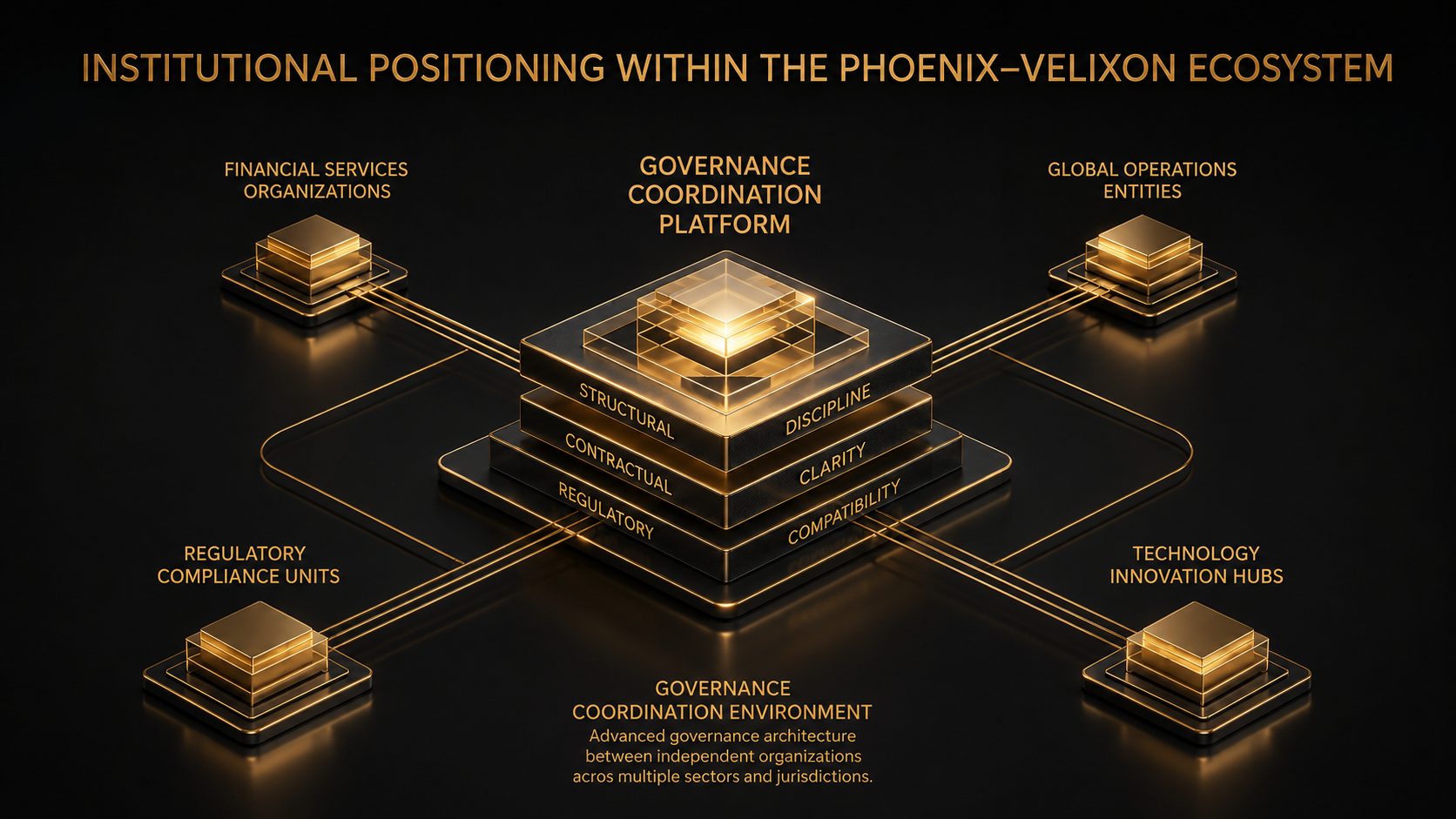
The architecture does not function as a centralized operating organization, corporate hierarchy, or execution authority.
Ecosystem Architecture
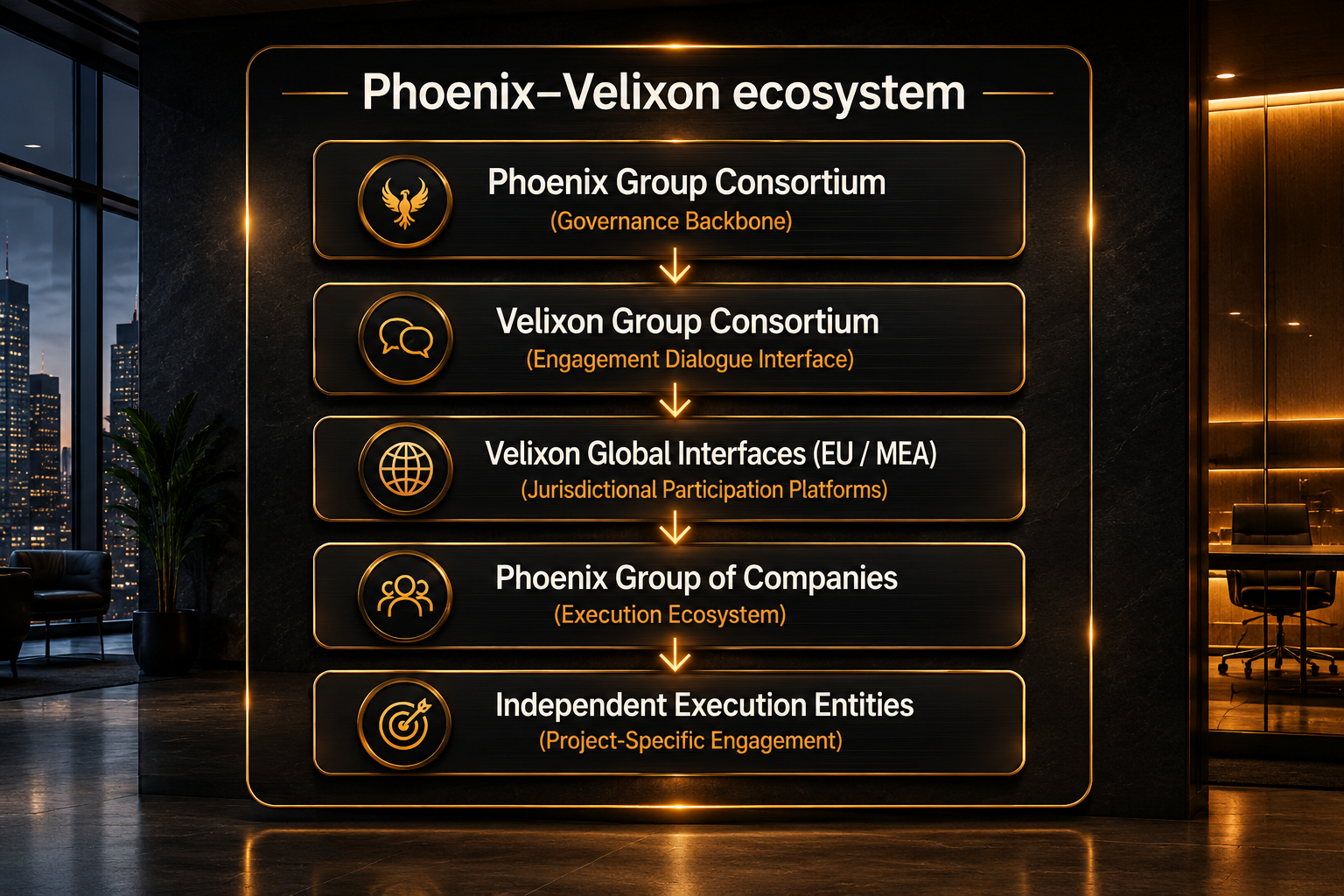
Operational execution occurs exclusively through independent entities participating in project-specific contractual frameworks.
The Phoenix–Velixon ecosystem architecture does not function as an operating enterprise or centralized execution authority.
Institutional Architecture Overview
The Phoenix–Velixon ecosystem operates as a distributed coordination architecture designed to support collaboration between independent organizations.
The architecture consists of:
- Governance Architecture
- Engagement Dialogue Environments
- Jurisdictional Participation Interfaces
- Execution Ecosystem
- Independent Execution Entities
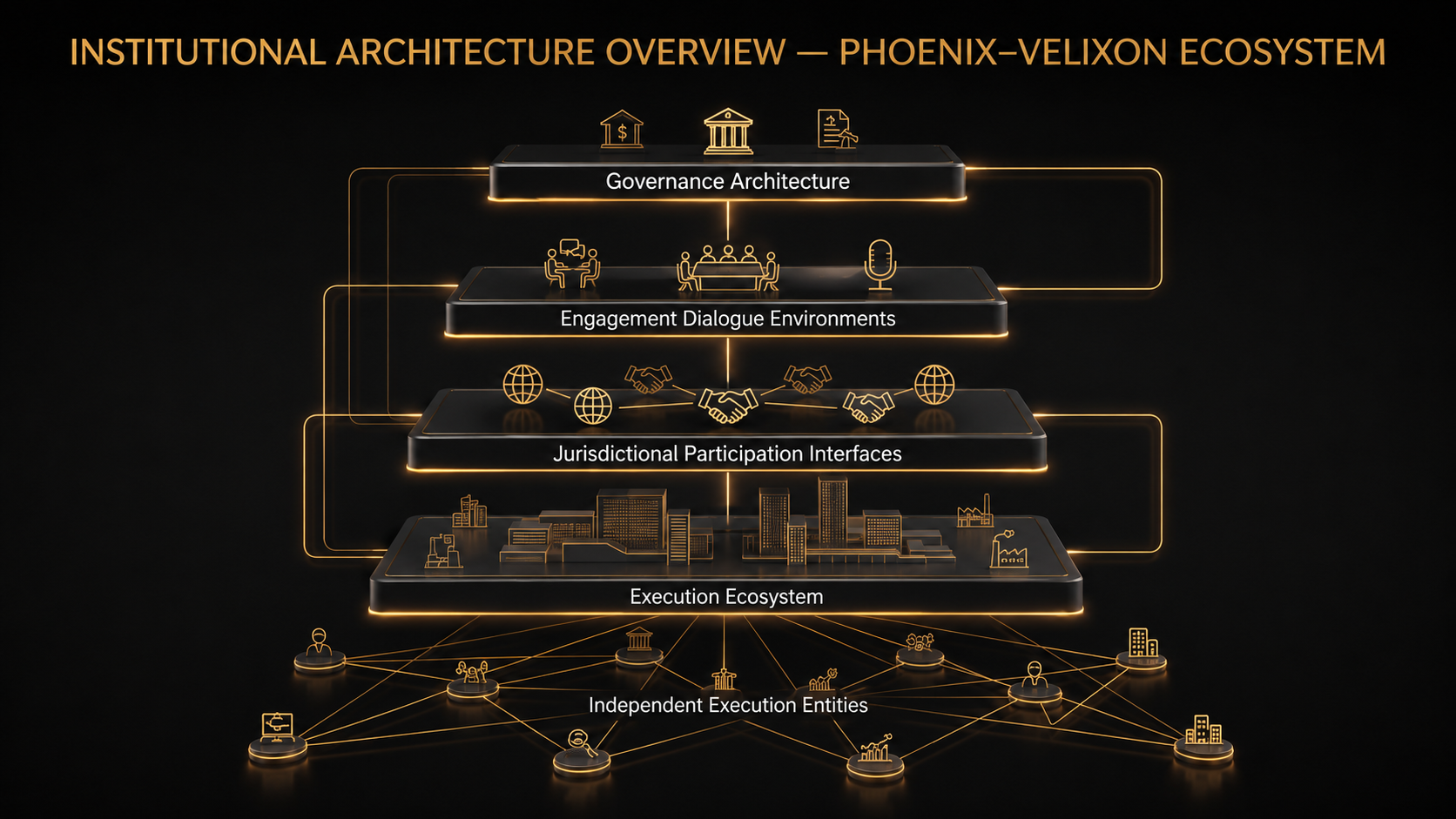
Each layer performs a distinct role while maintaining separation between governance coordination and operational execution.
Governance Backbone
Phoenix Group Consortium
Phoenix maintains the governance doctrine and structural coherence of the ecosystem architecture.
Its role is to:
- Preserve institutional clarity
- Maintain governance consistency
- Define structural principles of interaction
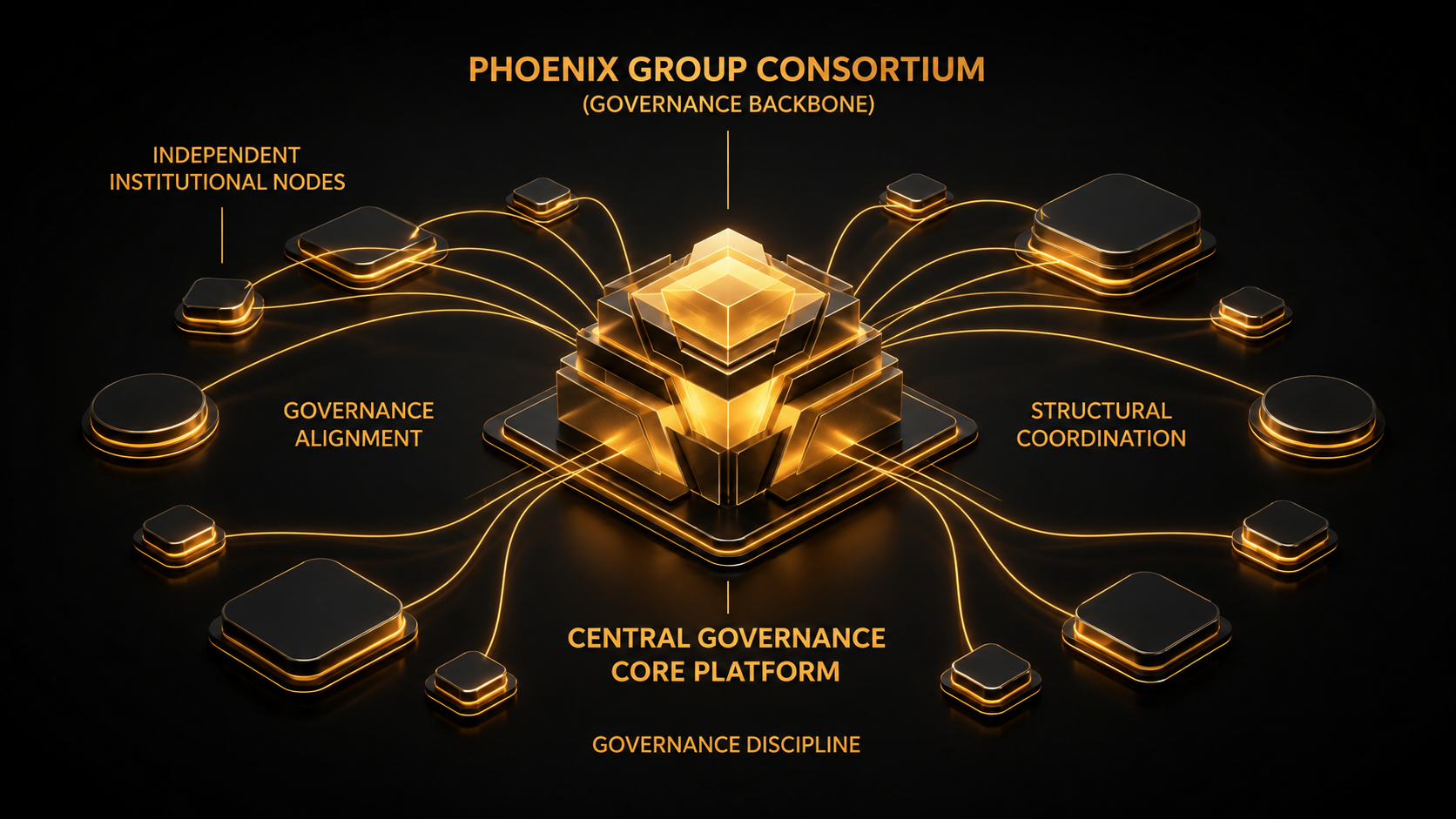
Phoenix does not function as an operating enterprise, service provider, or centralized authority.
Strategic Engagement Interface
Velixon Group Consortium
Velixon supports structured engagement dialogue environments through which independent organizations may explore potential collaboration contexts and assess capability alignment.
These environments:
- Enable structured institutional dialogue
- Support alignment across sectors and jurisdictions
- Avoid creation of operational commitments or implied authority
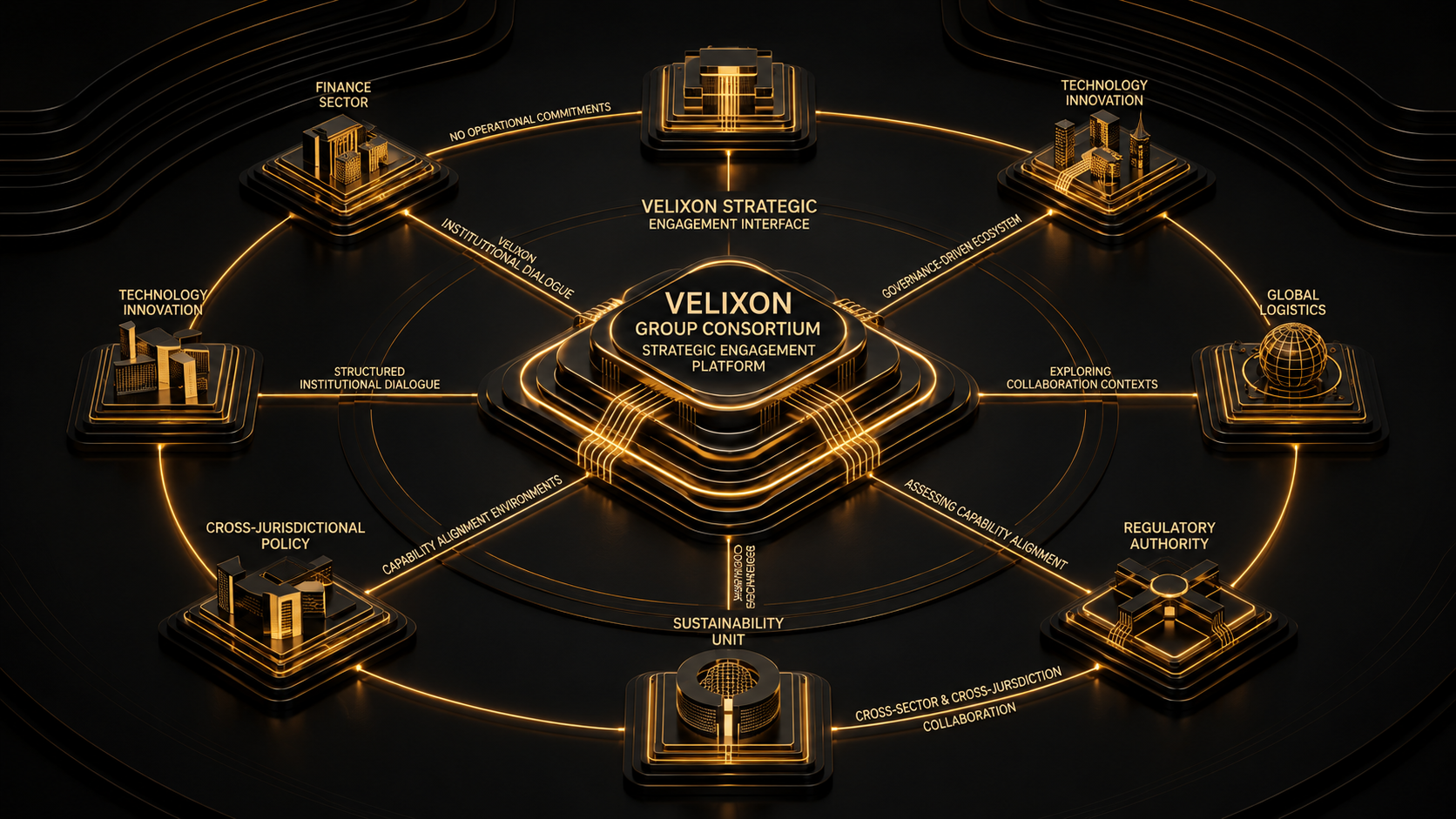
Velixon does not execute operational engagements.
Jurisdictional Participation Interfaces
Velixon Global Interfaces (EU / MEA)
Velixon Global Interfaces provide regional participation platforms that support structured interaction within defined regulatory and jurisdictional environments.
These interfaces are structured across two primary regional nodes:
- Velixon Global EU — European participation interface
- Velixon Global MEA — Middle East & Africa participation interface
Each interface:
- Operates within its respective jurisdiction
- Supports regulatory-aligned participation environments
- Enables cross-border institutional interaction
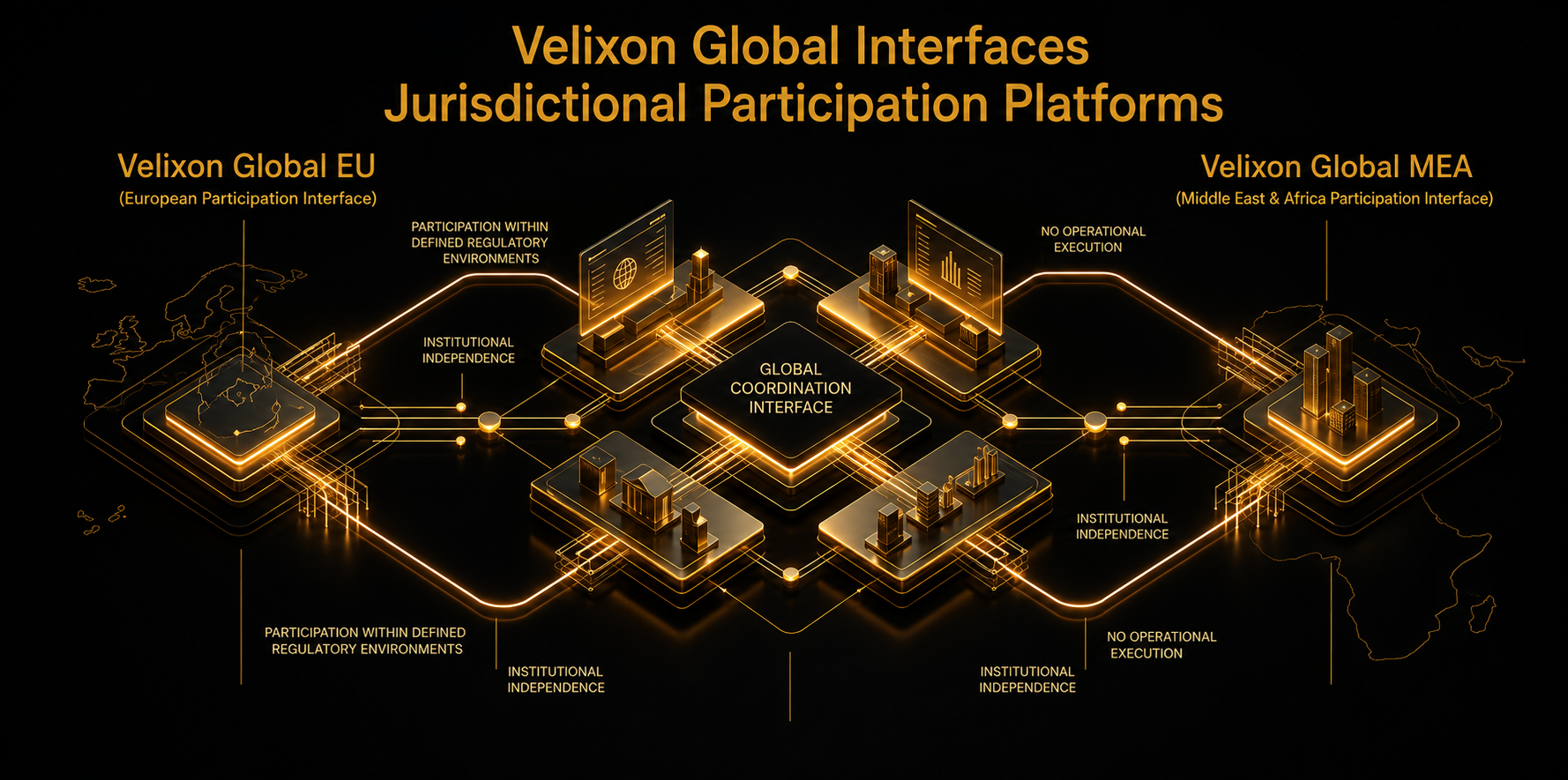
Velixon Global Interfaces do not execute operational engagements and do not function as operating entities.
Execution Ecosystem
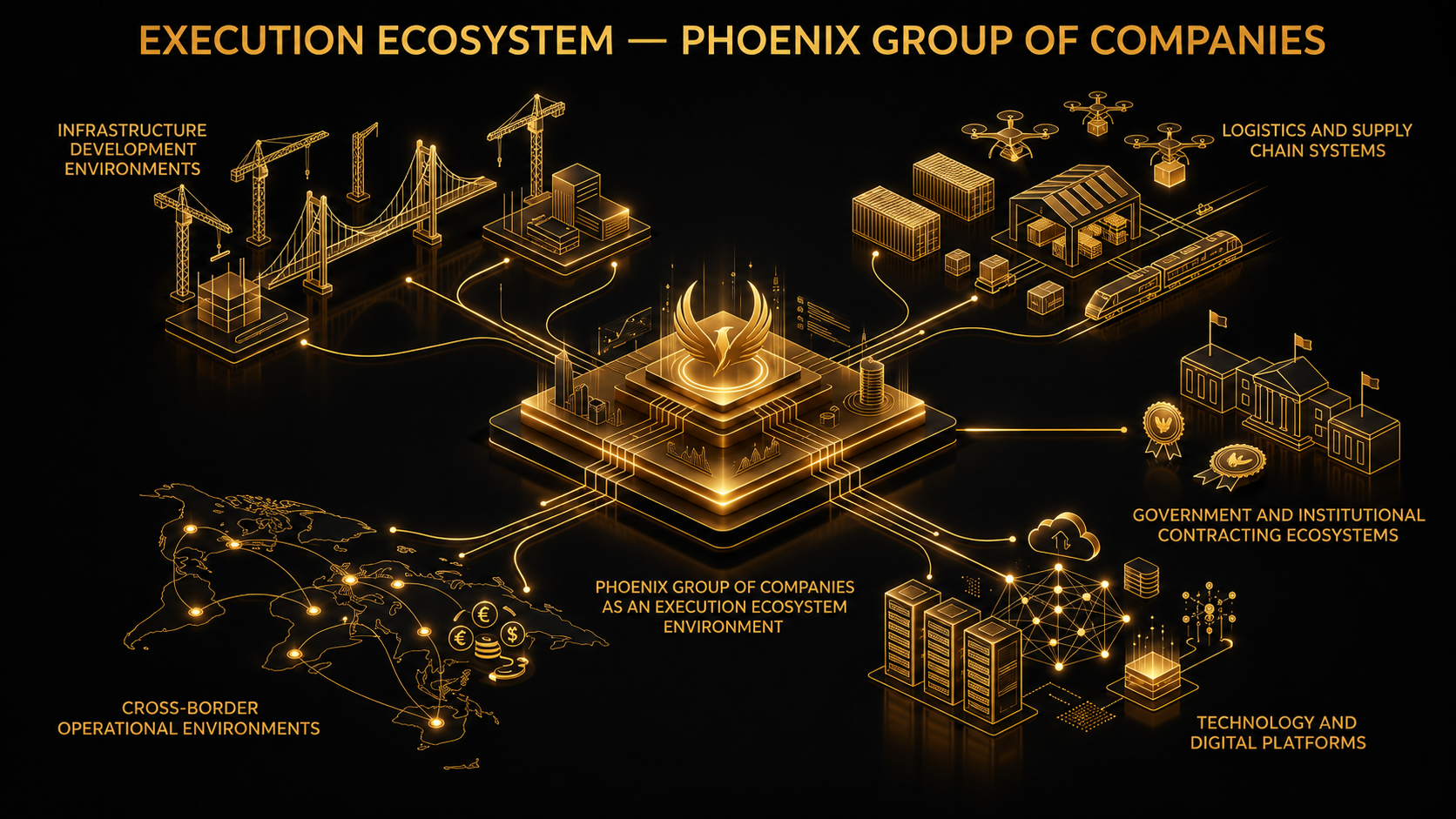
Phoenix Group of Companies
Phoenix Group of Companies represents the execution ecosystem within the Phoenix–Velixon architecture.
This layer consists of independent operational entities that participate in project-specific environments through formally defined contractual frameworks.
Execution activities are conducted exclusively through these entities within their respective jurisdictions, mandates, and operational capabilities.
The execution ecosystem may include:
- Infrastructure development environments
- Logistics and supply chain systems
- Government and institutional contracting ecosystems
- Technology and digital platforms
- Cross-border operational environments
Phoenix Group of Companies does not function as a centralized operating structure.
Each entity:
- Operates independently
- Engages through defined contractual roles
- Maintains full responsibility for execution
Independent Execution Entities
Operational execution within collaboration environments occurs exclusively through independent entities participating in project-specific contractual engagements.
Each participating organization remains fully responsible for:
- Operational activities
- Contractual obligations
- Regulatory compliance

The ecosystem architecture itself does not execute projects or assume operational responsibility.
Operational Environments
Collaboration environments associated with the ecosystem architecture may arise across a range of complex operational sectors.
These environments include:
- Infrastructure development systems
- Telecommunications and digital networks
- Logistics and supply chain environments
- Advanced technology and systems integration
- Cross-border infrastructure collaboration contexts
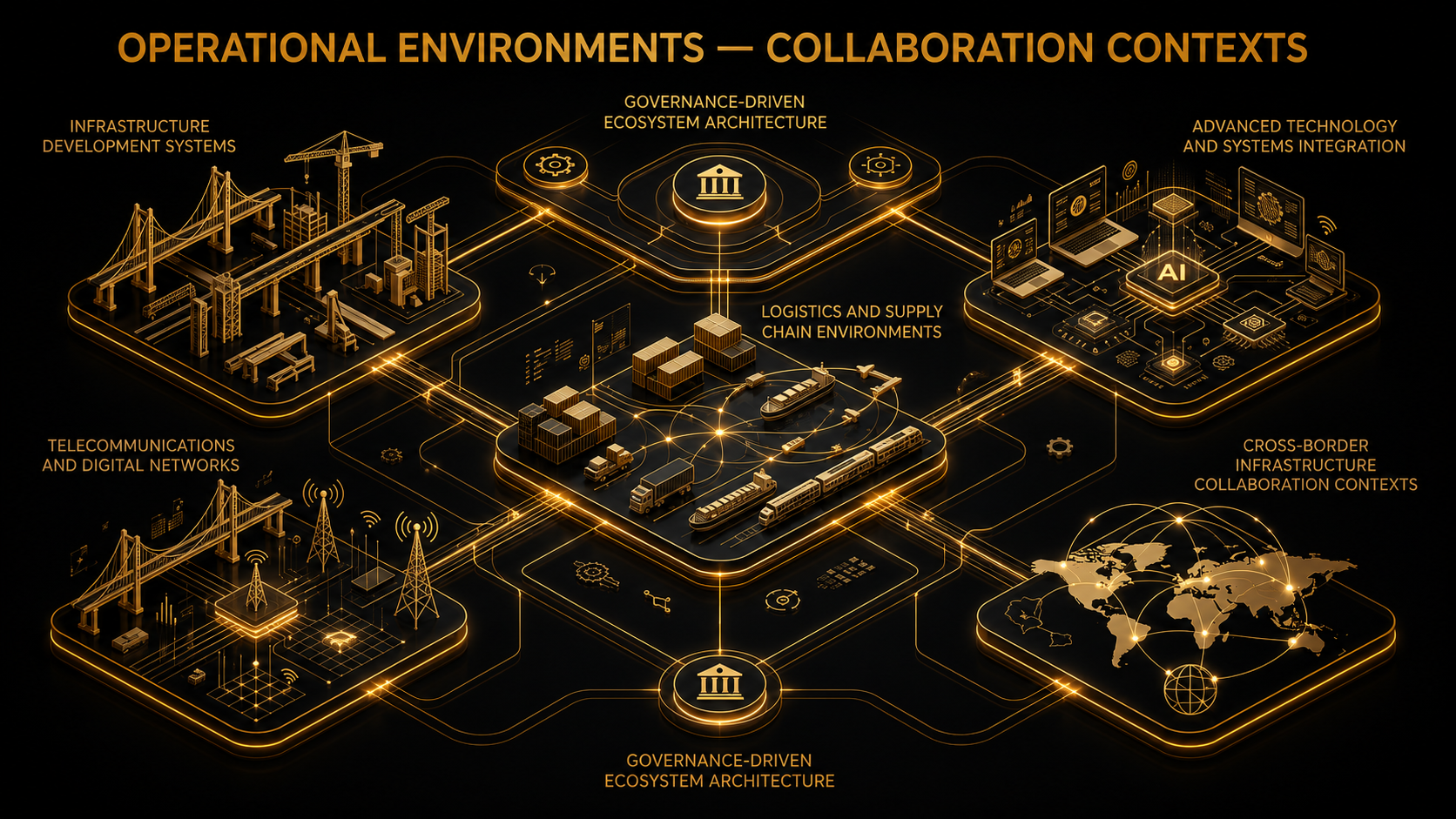
Participation occurs exclusively through independent entities responsible for execution.
The ecosystem architecture does not operate projects or deliver services.
Governance Doctrine Snapshot
The ecosystem architecture operates under a defined governance doctrine designed to preserve institutional clarity and prevent structural misinterpretation.
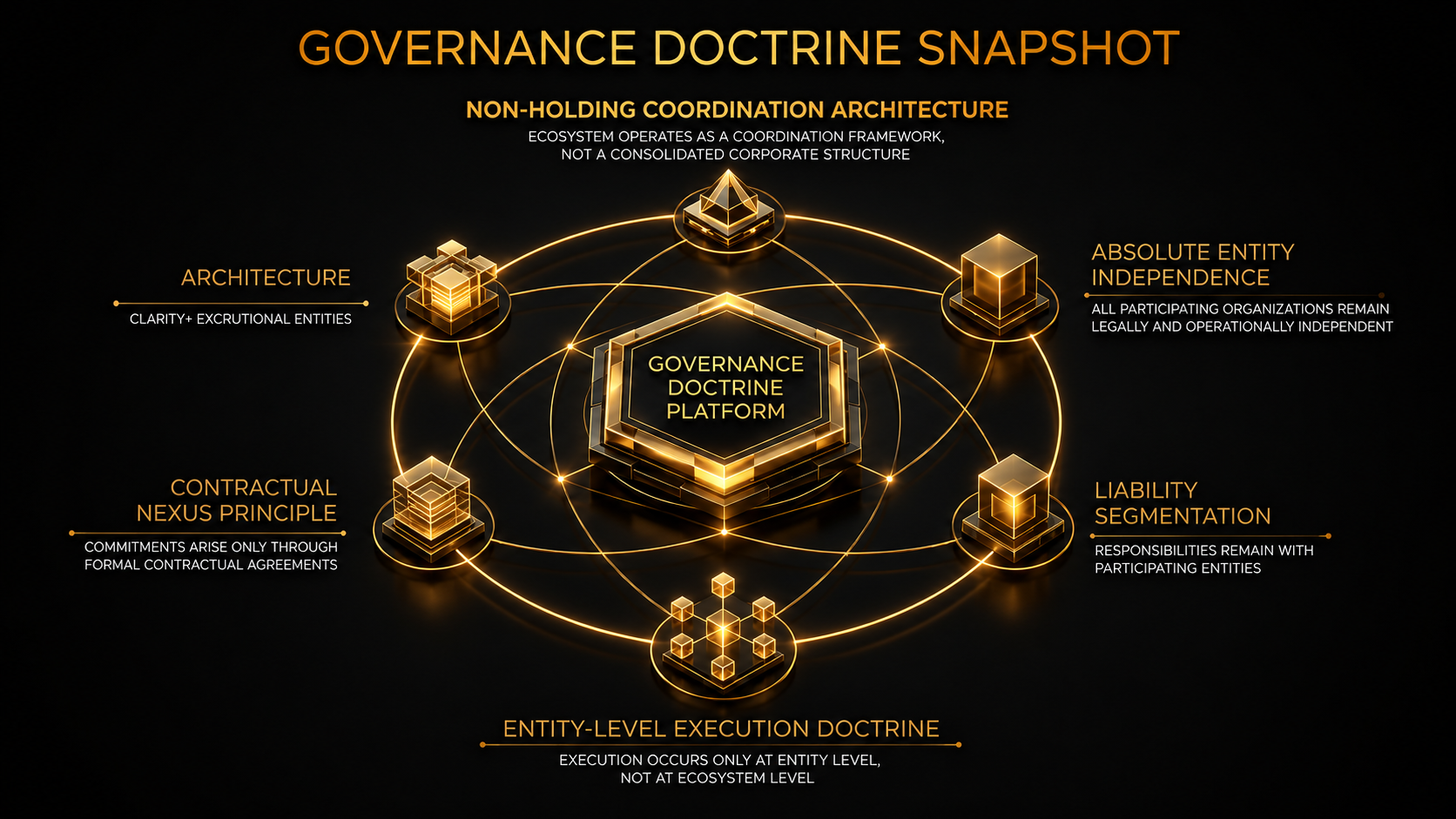
Key principles include:
Non-Holding Coordination Architecture
The ecosystem operates as a coordination framework—not a consolidated corporate structure
Absolute Entity Independence
All entities remain legally and operationally independent
Liability Segmentation
Responsibilities remain with participating entities
Contractual Nexus Principle
Commitments arise only through formal agreements
Entity-Level Execution Doctrine
Execution occurs only at entity level—not at ecosystem level
Institutional Engagement Framework
Organizations may engage through structured dialogue environments.
Engagement typically progresses through:
Dialogue Environment
Initial structured discussions
Capability Alignment
Assessment of complementary strengths
Collaboration Context Exploration
Identification of structured opportunities
Project-Specific Engagement
Formal contractual execution
The ecosystem architecture does not act as:
Broker
Intermediary
Investment platform
Centralized execution authority